
Stockholm Forest Cemetery – UNESCO World Cultural Heritage
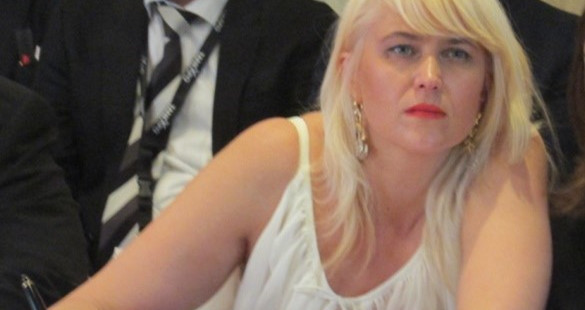
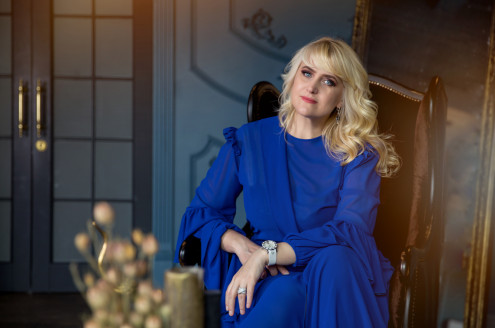
Last summer, the president of the International Association of Funeral Professionals (MGO MAPPS), the National Member from Ukraine in the World Federation of Funeral Performers (FIAT-IFTA) and the head of PF «Petro Veliky», a leader in the capital's funeral services market, Alla Landar, together with the Ukrainian delegation, visited the Stockholm forest cemetery (Swedish - Skogskyrkogården, Skugsshürkagorden).
Alla Landar during the FIAT-IFTA convention in Bologna (Italy)
I would like to share a unique and vivid example of a new page in the world funeral culture. Over the past few decades, forest-cemetery has become more and more popular in European countries. Stockholm achieved incredible success. It's hard to believe, but the fact remains that «Forest Cemetery», which began to be built only in 1917, just 77 years later, was included in the list of World Cultural Heritage. It is noteworthy that the Stockholm cemetery was included in the list of world heritage earlier than the Paris Père Lachaise. Well, Swedes have a lot to be proud of. And, of course, we could not help but be interested in the question –, what could be in it to earn the title of a UNESCO World Cultural Heritage Site?..
This is a truly unique place that will amaze even the most hopeless skeptic. In the fall of 1914, an international architectural competition was announced for the design of a new cemetery in Ensched, in the south of Stockholm. The competition ended in 1915 and was represented by 53 variants of the cemetery, and most of them were from Swedish architects. The project of young architects of the functionalism movement Gunnar Asplund and Sigurd Leverentz was chosen. Work began in 1917 on the territory of an old quarry overgrown with pine trees and lasted three years. Architects' use of the natural landscape allowed them to create an amazing atmosphere, which later had a strong impact on cemetery projects around the world.
A grandiose and majestic picture of the vitality of nature of incredible beauty with man-made oases and relict forest massifs with age-old spruces nine stories tall opened before our eyes.
The world of the pristine in its majesty literally takes your breath away, forces you to stop and admire the boundless triumph of nature.
See the video for the ratio of the height of a Scandinavian spruce to human height
https://www.youtube.com/watch?v=lK9QkSpHyoE
The love with which the Swedes honor the memory of those who left this world forever is evidenced by the fact that at the beginning of the last century, the most picturesque and extremely beautiful forest reserve was given to the future memorial.
The Stockholm cemetery is spread over an area of tens of hectares. It took only about three years to create a unique landscape design of the entrance group of the future forest cemetery park with ancestral burials on this site.
The Stockholm cemetery is spread over an area of tens of hectares. It took only about three years to create a unique landscape design of the entrance group of the future forest cemetery park with ancestral burials on this site.
At the entrance to the main part of the Memorial, you will be greeted by a majestic – for tens of hectares – lovingly well-kept lawn crowned by the powerful Cross of the Savior. The lawns of the cemeteries of North Rhine-Westphalia (which seemed large) on the border of Germany and the Netherlands instantly became more like playgrounds.
You appreciate all the greatness of the Cross already nearby. In front of it is the entrance to the sector of burials with large-scale ancestral places, heavy burial structures, framed with love by modeled sculptures from shrubs, which opens with a man-made arch made of twisted plants.
In the same areas there are also places in columbariums with thick walls of a meter thickness. They have – ancestral burials with 11 or more family members. Both places in the ground and ancestral burials in the wall, this is a whole era for the family, a family tree from several generations.
The burial structures of family burials, despite their small height, touch the depths of the soul with their individual design. Many families decorate their space: landscaping and color selection, biblical sculptures and porcelain toys, lanterns and bells, bells and rattles, lamps and decorative candles.
It will not occur to anyone not to take anything away, but even to rearrange or simply touch, disturbing the peace and decoration of ancestral graves, invading someone else's space of peace, memory and love.
See video panoramas of ancestral burials Skogskyrkogården
https://www.youtube.com/watch?v=ifv9ThQH7c8
I have never seen anything like Lisovo in Stockholm before. It is not just cleanliness and care that impress. Landscapers, janitors, and gardeners work at every step. All equipment, including mini-tractors that collect cones, is almost silent. Nothing disturbs the music of natural silence. Everything emphasizes the greatness and immortality of eternity.
See video cleaning with a special technique of cones
https://www.youtube.com/watch?v=225DChMNntg
In the center of the Memorial is the size of several football fields, to the right of the Cross of the Savior is a man-made hill five stories high, and the Road of Life leads to it as a tribute to those who are no longer with us.
At the foot of the hill and the life-giving Cross on the shore of the lake with swans and white lilies, there is a place of ceremonies under the open sky, which makes it possible to feel the temporality of our stay on Earth in moments of farewell. We all need to learn to appreciate every minute, every moment of the Divine gift of life.
Finally, when we go to the left of the Cross, we find ourselves near the Funeral Home with its chapels of Faith, Hope and the Holy Cross. To the left of them in the depths of the forest, hidden from view, was the crematorium building, and next to it «is the entrance and approaches to it, disguised by powerful trees.
Finally, when we go to the left of the Cross, we find ourselves near the Funeral Home with its chapels of Faith, Hope and the Holy Cross. To the left of them in the depths of the forest, hidden from view, was the crematorium building, and next to it «is the entrance and approaches to it, disguised by powerful trees.
See video panoramas of the main sector of Skogskyrkogården
https://www.youtube.com/watch?v=dfRecPlh4Us&feature=youtu.be
The majestic farewell hall for civil public ceremonies is three times larger than what we have seen in Europe before. If necessary, – will accommodate up to a thousand people without problems. Strict rows of seats, and in front is a pedestal, a tribune, sound and video equipment, a stage, state blue-yellow flags, an organ for mass.
The covered square in front of the large hall deserves special attention. In the center is a majestic monument with many sculptures on a biblical plot, dedicated to those who will never return.
Several farewell processions will be placed under this large canopy without any problems.
It is noteworthy that everyone goes to the farewell hall by invitation-passes, and the priest or the organizer of the ritual, depending on the nature of the funeral, will not miss anyone.
Inside the church farewell hall at the crematorium, where we managed to look for a moment, all in brown tones, the wall painting reminded us of our Orthodox frescoes, on the wall next to the sculpture of the Savior, white candles and icons stood a portrait of a woman. It became clear why the coffin was chosen white.
The priest and his assistants in solemn religious clothes and in white capes. The time of the beginning of the funeral mass, and therefore the gates to outsiders were closed...
Small details in all burial places testify to the love with which Swedish families treat the memory of the dead with trepidation. Angel wings, improvised gates of paradise, flower arrangements, lanterns with lamps, etc.
Graves with lamps and decorative lights on solar batteries were especially moved. During the day, illuminated by the gentle Scandinavian rays of the sun, and at night – by the energy of solar storage devices, they symbolize mother's love, memory and sorrow for the beloved, irreversible loss, someone's small but dear heart tribute. Where it is unattainable adulthood, where fleeting love, and somewhere an impossible dream, broken tomorrow, but, at the same time, so eternally in love yesterday...
Eternal lights, as if they came down from heaven, illuminate the last refuge, leaving only memory alive in moments of silence, memories, quiet sadness and mental suffering...
Temples of various Christian churches can be found in the cemetery. In most Churches, despite their small size, an organ has been installed, and there are specially designated places for the choir.
One of the temples in Stockholm Forest Cemetery – Protestant Church Temple for Sailors.
What is especially remembered in the areas in the protected area. Man's attitude to nature. Slender rows of old trees seem to protect young shoots of plants. No one cuts them down, cuts them or even transplants them. On the contrary, they are protected in every possible way, where – is needed, they are tied up and, if necessary, the next burial simply retreats from this place, giving the young, barely taking shape, a tree the opportunity to develop.
This is a living reserve in practice, which coexists peacefully with burial places. Two worlds, like two symbols – eternal and living, complement each other, coexist peacefully, showing an example of love for nature and respect for ancestral memory.
Separately, it is worth stopping at the old part of the cemetery. Looking at the dates of death of the first plots we entered (20-40s of the 20th century), it becomes obvious that no one here levels the old plots later, as in many European countries, and the ashes of the long-dead are not burned. Therefore, everyone rests as long as the cemetery serves. Burial in one place is key. This is how the family tree of relatives and friends who left this world forever is built.
But it was impossible not to notice one place in the old «quarter». Recreation area with fountains, benches, lamps and even alpine slides. Upon closer examination, it turned out that this is the territory for scattering ashes. As a rule, this is done in advance according to their will by lonely people.
Green sector of the forest cemetery. Tablets with the names of those who went into eternity.
But those who have finished their life here are reminded of nameplates. For this purpose, columns 1.7 m high made of marble and granite are installed here, where these plates are actually placed. The place is very picturesque and cozy. Elderly people sit around fountains and artificial rivers with mini waterfalls and fountains, reading the press or just remembering something, some play chess, mothers walk with children in strollers...
See video with waterfalls and fountains on the green area Skogskyrkogården
https://www.youtube.com/watch?v=B7nqagglGCQ&feature=youtu.be
Let me have some digression. 20 years after Freddie Mercury's death, his fans finally found his burial, or rather the place where his ashes were scattered, thanks to the same column, albeit in a different place. The Queen studio and Freddie's house were located for a long time in the city of Montreux in Switzerland on the shores of Lake Geneva. And Charlie Chaplin spent the last years of his life in the neighborhood, in the city of Vevey, just a few kilometers from Montreux. As you know, his body was stolen immediately after the funeral. Mercury literally feared in panic for the fate of his body after his death. Why, probably, chose such a fate for his ashes in advance.
A small tablet is on a high plinth. The inscription on it reads: «In Loving Memory of Farrokh Bulsara. Pour Etre Toujours Pres De Toi Avec Tout Mon Amour ». Which translates as «In memory of Farukh Bulsar. To be with you forever with all my love », and caption «M.»
In the final part of our visit to the Memorial, our way lay to the park area. A majestic alley leading to the museum part of the cemetery originates there. Indeed, they know how to keep the past here...
The smooth-glossy surface of the slab on Greta Garba's grave is left without any decorations, except for the envelope.
And the inscription engraved on it consists of only two words: this is the name of the actress, written by hand
In the museum, you can learn about the life path of all outstanding personalities buried here, such as actress Greta Garba, learn the details of the construction of the memorial cemetery, everything about architects, history, details of acceptance into the UNESCO cultural heritage in 1994, interesting facts about the past of the memorial cemetery, as well as its present.
Separately, in a few words about the memorial days. The sky burns from hundreds of thousands of candles, lanterns, lamps of all those who came during the day to remember both their ancestors and recently deceased relatives and friends ...
There is something to be proud of, something to learn. The forest cemetery (Skogskyrkogården) as a living embodiment of the family tree is nothing more than a cultural memory of the people. The sources of its formation, such as folklore, memoirs, fiction, historiography, will turn into dry information for textbooks without oral tradition. The memory of centuries in the form of a family tree, as we saw on the example of the Stockholm Memorial, is a living embodiment of the oral tradition and historical memory of the people.
At this place, they pray for the heavenly beings, remember their life path, teach their children and grandchildren by their examples, warming their souls with the blessed fire of candles of memory.
Candles and lamps that burn here all the time, – is a symbol of spiritual union with relatives and dearest people, with those who will never come again, but will always preserve and protect the love and tenderness of the descendants' home. Living fire – is the involvement of the family in the Divine light, and the place of pious tradition. Therefore, the smallest representatives of families participate in all memorial events...
How will you treat the memory of your kind, how will you honor it, take care of the ancestral burial, this will be your ancestral tree, this will be how you will be treated and remembered. Earthly life is fleeting, and memory is eternal...
Why, in fact, did I decide to share what I saw? The answer is simple. I would very much like Ukraine to adopt the best that exists in this world, to learn to protect every minute, every moment of the Divine gift of life. We need to pay a well-deserved tribute to our ancestors, regardless of their burial place, risk rejecting fear, and learn to be happy people. Even in the memory of future generations...
I hope that sooner or later, the state will give us Ukrainians the opportunity to realize and show their attitude to the past, to build their Tree of Life. And, as you know, maybe we will be able to claim a place in the world of UNESCO cultural heritage in the near future.