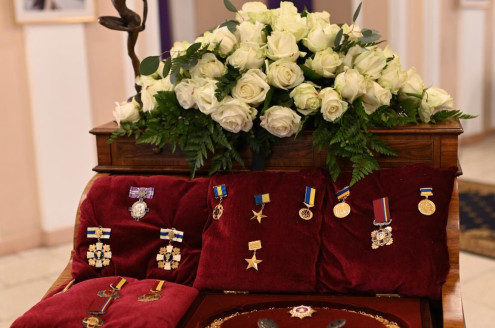

Burial diagnosed with Covid-2019. How is this problem solved in the world?
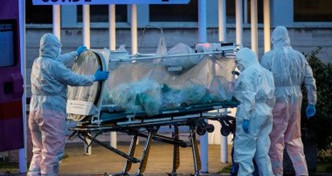
The first waves of the global Covid-19 pandemic are behind us.
Some countries are coping with the coronavirus more successfully, while for others everything is only beginning. What remains unquestionable is that 2020 will be remembered as one of the most tragic periods in our history. The world will never be the same again.
To look at the most difficult aspect of this global problem — how the world bids farewell to the victims of the coronavirus — an expert and the President of the International Association of Funeral Professionals (IAFP), the National Representative from Ukraine to the World Organization of Funeral Operatives (FIAT-IFTA), and the head of the Kyiv-based Private Firm “Peter the Great,” Alla Landar, analyzes the world’s press and examines the challenges faced by different countries and continents.
How it all began
Many questions related to the spread of Covid-19 over the past year and a half have worried people. Among the first: How are farewells to those who died from the coronavirus conducted around the world?
Let us recall how it all began. At the start of the pandemic, disinfectants and protective equipment instantly became scarce, causing difficulties for funeral homes as well. Many of their managers feared they would soon be unable to perform their work — as the German magazine Der Spiegel wrote in spring 2020, at the height of the first wave.
The world watched in horror the images from Italy, where coffins were transported to crematoria on military trucks. The hardest-hit regions were Bergamo and Brescia, where the warm, humid climate became an ally of the virus.
In Spain and the United States, hundreds of people were dying every day, and soon the German funeral industry had to prepare for similar scenarios. Munich and Frankfurt airports — where every 3–5 minutes three planes would take off or land — processed hundreds of thousands of passengers daily until their eventual closure.
Funeral homes across Germany ordered coffins and body bags, largely from Eastern Europe. Many changed their usual work processes to protect their employees. No one knew exactly what measures were correct. In Hamburg, for example, one of the two crematoria was temporarily closed to concentrate cremations in a single location. Staff from the second crematorium were kept in reserve in case of mass infections among their colleagues. Contact with clients, relatives and friends of the deceased was minimized.
German journalist Michael Frelingsdorf recalls:
“When funeral home employees wash, dress and place the deceased into a coffin, they come into contact with bodies that may have died from coronavirus. Although the dead do not spread the virus by coughing, they still release biological fluids, and gases escape from the lungs and intestines, especially when the body is moved. Therefore, funeral home employees had to protect themselves from the dangerous virus individually.”
If the death certificate indicated that the deceased had been infected with coronavirus, additional measures were taken: the body was placed in a special protective cover or wrapped in materials soaked in disinfectants. In the early stages, masks treated with chemicals were placed on the deceased.
Why German funeral homes struggled during the first wave
Unlike doctors and medical staff — who received protective equipment from medical associations and health authorities — funeral homes in most federal states were not considered part of the pandemic response system, and therefore received no protective supplies. They had to obtain all disinfectants, special clothing and protective gear on their own.
Early on, the situation became so serious that some funeral homes were on the verge of halting operations.
Everyone survived as best they could
Der Spiegel wrote that the Federal Association of German Funeral Homes in Düsseldorf received hundreds of calls from anxious members, recalls the association’s Secretary General, Stefan Neuser. He therefore addressed the issue directly with the Minister of Health, Jens Spahn. Additional protection was critically needed because there was a high risk: many deceased likely had undiagnosed viral diseases.
If someone died of coronavirus in the hospital, there was high confidence that the death certificate was accurate. But for those who died in nursing homes, there was no such certainty. Thus, what could not be done for the living was even less feasible for the dead — especially testing for coronavirus, Der Spiegel noted.
The authoritative Deutsche Welle described the situation in German crematoria during the first wave. The manager of the crematorium in the town of Döbeln, Saxony, Herold Münster, long hesitated before showing journalists what was happening at his facility. He always believed that funerals and everything associated with them must honor the memory of the deceased. He did not want to frighten people, especially in those days — but as the situation worsened daily, he decided to share everything with the press.
He opened the doors to the crematorium and showed the hall where farewell ceremonies usually took place — a room designed for 90 people. But now, instead of mourners, there were rows of wooden coffins stacked atop one another, some marked “coronavirus.”
The crematorium’s capacity had limits, and the mourning hall had gradually turned into a waiting room for cremation. Farewell ceremonies were suspended. A trailer with an additional refrigeration unit was brought into the yard to store bodies until cremation. The same situation was occurring across Europe: funeral homes rushed to create extra storage space as quickly as possible. In Saxony, mortality rose by 109 percent.
Italy, the first EU country to face the pandemic on a massive scale, immediately banned funeral Masses in all churches — previously the only dignified way for Catholic Italians to bid farewell to the deceased. Clergy reassured families, promising to hold a Mass for each person once the epidemiological situation improved. Families were still allowed to invite a priest for a brief prayer.
The alternative in Italy became short funerals without traditional processions from home to cemetery. All attendees had to keep distance, and handshakes or any physical contact — even to express condolences — were prohibited.
What do Italians say? The coronavirus strikes the sick twice: first, patients die in isolation, far from loved ones, and then they take their last journey accompanied by strangers. Online funerals became increasingly common. Patients passed away in sealed hospital wards that relatives were strictly forbidden to enter. The most physicians could do was help connect dying patients with their loved ones via Skype for a final goodbye.
From a logistical standpoint, the Italian funeral sector — particularly in the north — faced immense pressure. The high number of deaths created long queues for burial and cremation. The horrific scenes from Bergamo, with rows of coffins lined up along a church, told the story of an entire generation lost within weeks. Local cemeteries and crematoria were overwhelmed, and the military had to transport bodies to neighboring provinces. A similar situation unfolded in Emilia-Romagna. Many funeral homes were quarantined, and those that remained operational ran out of funds to purchase protective equipment.
Deutsche Welle recalls how a British family could not arrange a funeral for an elderly man who died from coronavirus because the entire family was in quarantine. The head of the family had returned from a two-week trip to northern Italy and fell ill after three days. The virus was not diagnosed immediately because symptoms were attributed to his arthritis and heart disease. After several days in isolation, the elderly man died, and his family was required to remain in quarantine. Such cases were becoming increasingly common in Britain.
In Iranian society, at a man’s funeral people usually greet one another with hugs, following Muslim tradition. However, the current restrictions have deprived everyone of this long-standing custom. Farewells now take place in complete solitude. Iran already counts thousands of people who have experienced such feelings, calling it “mourning at a distance.” As a result, very few people now gather at funerals not only of those who died from the virus, but also of those who passed away for other reasons. “When you cannot mourn your loved ones, you cannot believe in their death,” people in Iran say.
A brief note about the Vatican. Because of the coronavirus, the Pope closed St. Peter’s Basilica and the adjacent square in the Vatican. From the basilica’s balcony he traditionally delivers his addresses. Religious services in Rome's churches were decided to be held without public participation. The churches are also closed, so Mass is conducted online.
In friendly Georgia, approaching the coffin is prohibited. Bodies must be buried within 72 hours after the confirmation of death. The deceased is buried wrapped in hermetically sealed plastic. A rather unexpected piece of news is that the bodies of Georgian citizens who died from coronavirus in other countries are buried in those same countries.
According to the recommendations of the World Health Organization, as few people as possible should attend the funerals of coronavirus victims. The body of the deceased should not be transported from one locality to another unless absolutely necessary. As of early May, more than 1.5 million people worldwide have been infected with the coronavirus. Therefore, the most important safety measure for humanity in 2021 is vaccination, the study of new strains, and the systematic documentation not only of each regional outbreak of the pandemic but also of each individual case. The development of new vaccines remains relevant as well, since each existing one still has flaws and limitations.
The recommendations for everyone remain unchanged. If Covid-19 transmission has been registered in your area, follow simple safety rules: keep a safe distance from others, wear a mask, ventilate indoor spaces well, avoid crowded places, wash your hands, and cover your nose and mouth with your elbow or a tissue when coughing or sneezing. The WHO recommendations are widely available online on numerous websites and translated into most of the world’s languages.
At the same time, one should not forget to follow the recommendations issued for each country, region, locality, and even workplace by the national Ministry of Health and sanitary authorities.
In addition to vaccination and treatment methods, new problematic issues have arisen that scientists will have to work on in the coming years. These are related to rehabilitation due to complications and post-illness consequences: muscle pain, persistent fatigue, and even psychological problems. Those who have suffered a severe form of Covid-19 may experience aftereffects even six months after infection. Life continues to set new tasks for researchers, while the general population must keep following all recommendations, because it is better to learn from someone else’s sad experience than to face one’s own.